Resources
A complete guide to reusable packaging
Packaging accounts for around 30% of our waste. Reusable packaging isn't just an environmental choice, it's becoming a business imperative.
Why consider reusable packaging now?
Global commitments
Over 500 governments and businesses have signed the New Plastics Economy Commitment, pledging 20% reusable packaging.
Regulatory pressure
Plastic Packaging Tax and EPR in the UK, Europe and parts of the US are increasing single-use packaging costs by up to 10 times.
Consumer demand
81% of consumers express interest in switching to refillable products.
Understanding reusable packaging models
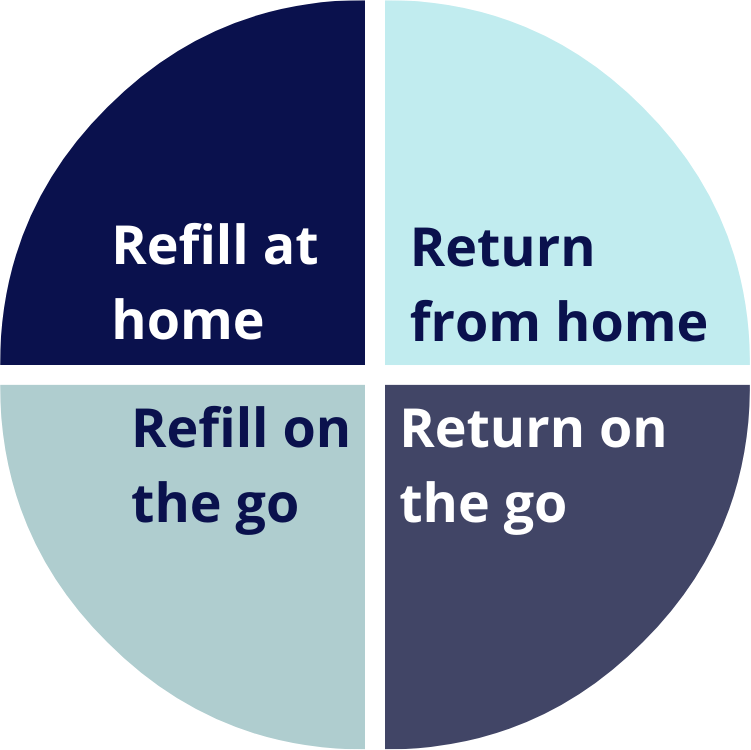
It's not one size fits all. The Ellen MacArthur Foundation identifies four main categories of refillable and returnable packaging.
Refill at home
Customers refill reusable containers at home, often via a subscription refill delivery — for example Bower Collective's refillable household and personal care products.
Return from home
Packaging is collected through pickup services managed by logistics partners — for example Gaia Pulses' home collection for ready meals.
Refill on the go
Customers refill containers at external locations, usually in-store bulk dispensing — for example M&S refill stations in selected stores.
Return on the go
Users return packaging at designated drop-off points, often with deposit return — for example Starbucks' reusable cup programme.
Building your business case
The most sustainable solutions are the ones that stand on their own two feet commercially. Here's how to build a compelling case.
Start small
Choose one product or packaging type as a pilot, and consider both B2C and B2B opportunities.
Identify key stakeholders
Determine decision-makers and their priorities, and establish relevant metrics for success.
Calculate the impact
Model and compare packaging options to understand cost, carbon and material savings, and factor in the legislation that affects cost.
Essential partnerships for success
Circular systems are complex, with unique requirements for physical and digital infrastructure across the supply chain. No company can run a reuse system in isolation — it takes an ecosystem. When building your partner network, ask yourself:
Who will manufacture your reusable packaging?
Existing suppliers or new ones?
How will you handle reverse logistics?
What cleaning protocols and partners do you need?
Which technology solutions will help you track and manage the system?
The role of Digital Passports
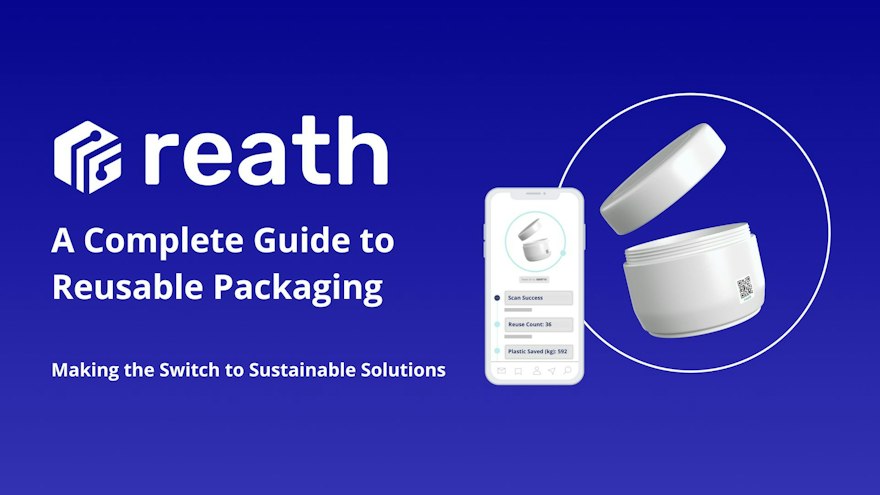
A Digital Passport creates a unique digital identity for each physical item in your reuse system, made up of the item plus a unique ID on a machine-readable code (QR, NFC, RFID or barcode). It maintains a timestamped record of the item's journey and can store customised data about materials, product information, batch codes, process details and environmental impact.
We've implemented this with Bower Collective, tracking their reusable pouches through our digital passport system.
Read the case studies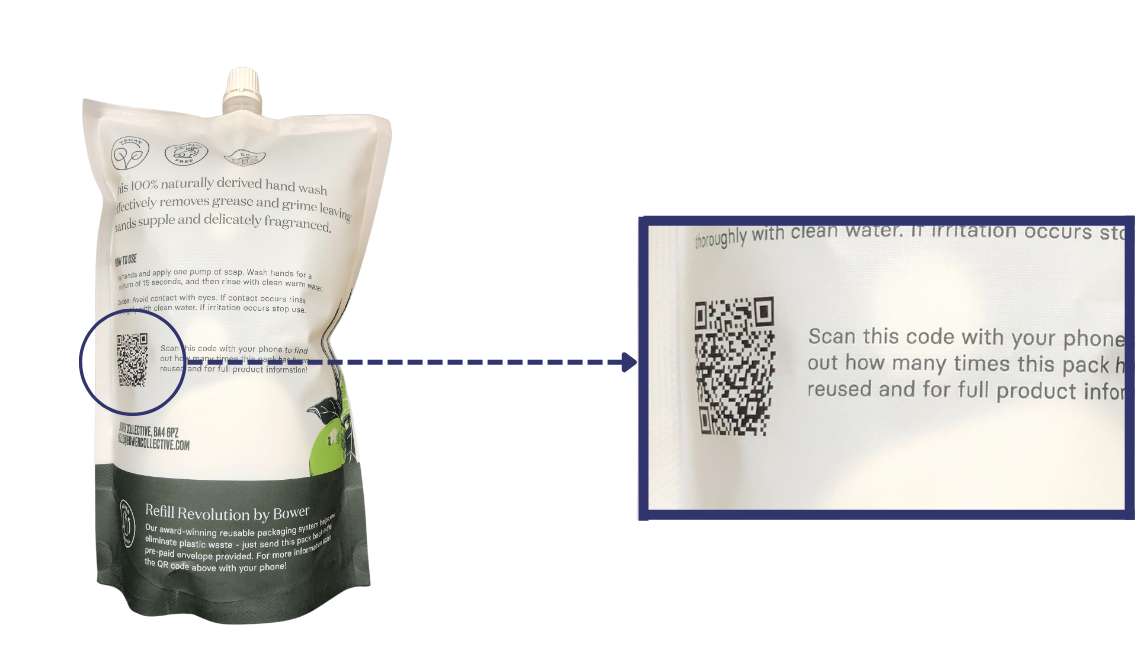
Ready to explore reuse?
Whether you're just starting to think about reuse or ready to launch a pilot, we can help you scope it.